
Under construction. Thank you for your patience while I create the English versions of my blogs.
Prevention is better than cure…
In my work, I regularly come across issues that cause a lot of stress for PhD candidates in the final phase of their PhD. A stressful ending can often be avoided — and prevented. Especially when you still need to publish your last papers while simultaneously looking for a job. Or when you’re already onboarding in a new position. Or buying a house (and moving). Or preparing for a long trip around the world.
Below are 5 tips to help prevent the most common stress factors I encounter. And remember: better to start late than to never think of it at all.
1. Keep track of connections
Start keeping track now of who has been important to the development of each research project.
Create a notes list for yourself (for example in the cloud). Just spoke to someone who influenced the direction of your research? You won’t remember that conversation 3 or 4 years from now. Write it down. This way, you won’t forget anyone when writing your acknowledgements — often done during a very busy period. You can always filter later.

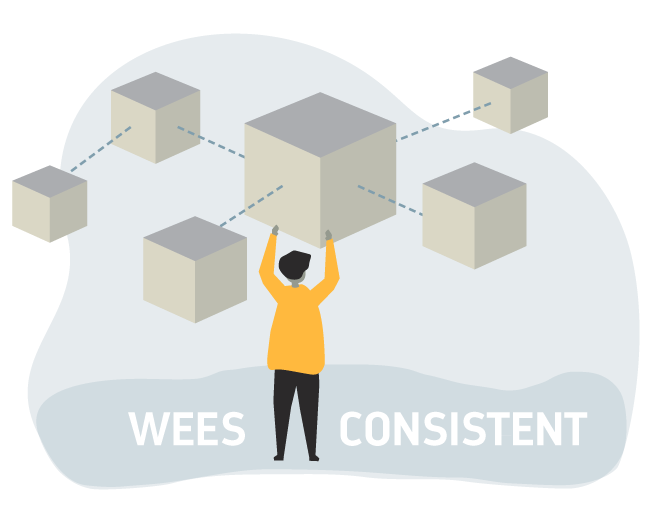
2. Be consistent
Use one clear, consistent format.
Although each journal requires its own formatting, your texts will eventually be brought together into one PhD thesis. Therefore, always make a copy of the final article and format it in your own consistent way. Be deliberate and consistent in all your choices. Write these choices down as a checklist that you review every time. Pay attention to things like:
- Choosing American or British English (organizing / organising)
- Formatting of headings and numbering
- Consistent layout of tables and figures (text, images and colour)
- Uniform references and bullet lists
- Read my LinkedIn articles about formatting your thesis in Word (Dutch, english wil become available on my site)
- Another useful tip: this blog by Suzanna van der Laan (Dutch, translate with plugin?)
Your thesis text will later be redesigned in a different page format and typeface. Using the tips from these articles will save you time and money at the end of the process.
Consistency looks good (and you want that), and making changes afterwards is expensive. Apply your choices consistently using a checklist. You can download my Consistency Checklist — based on over 13 years of experience — below (English). It will help you avoid time loss and stress in the final phase of your PhD.
Download the Consistency Checklist
3. Save source files
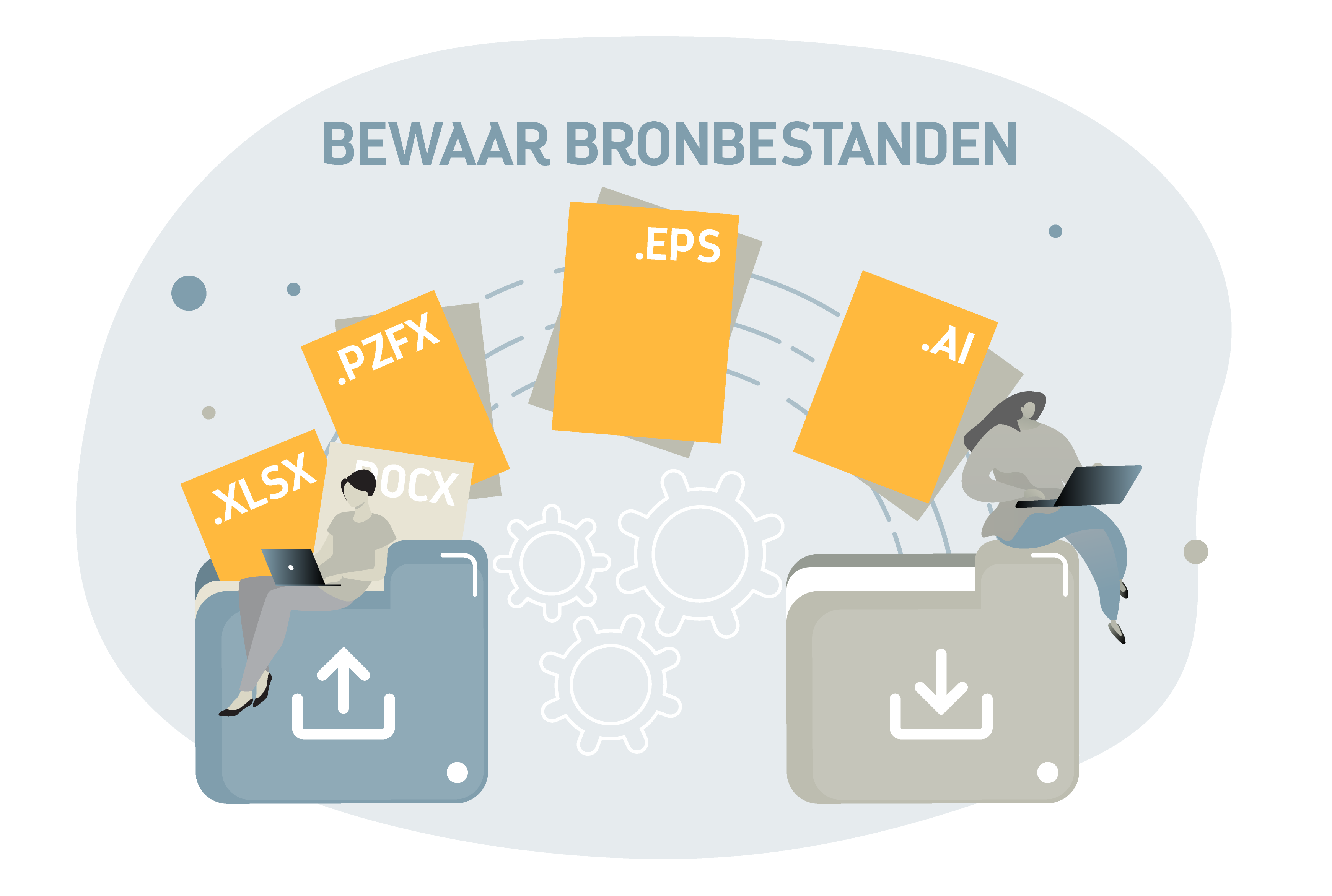
Didn’t create it yourself? Ask for the originals.
Figures as printed in journals are often not good enough for high-quality printing in your book. With the original source files, however, you can export them properly later on.
Immediately email the creator(s) to request the original file of any figure you didn’t make yourself. Three or four years later, this becomes much harder. Important to know:
- For line drawings and graphs (scatter plots, bar charts, etc.), ask for the source file or a vector file
- Even for ‘simple’ figures made in Word, PowerPoint or Excel, keep the original Microsoft file
- Images imported into a Word file cannot be used for professional printing — so always ask for the original source files of imported images, such as photos or icons used in flowcharts
- Store everything from the start in a clear, well-organised folder structure so it remains easy to find
Made it yourself?
Read my blog about the difference between pixel and vector graphics (Dutch, english will follow soon-ish) to learn how to save your figures properly. Always save two versions: one for the journal and one (larger, sharper, better) for your PhD thesis.
4. Start early
Think about a strong title. Ask for help.
Read my English blog series (part 1-6) on LinkedIn about the importance of a short, powerful title. In short: a strong, catchy title works well for you, your thesis and your designer. But such a title is usually not easy to come up with.
So: use support lines. Coming up with a good title takes time. And you’ll probably need extra time to convince your professors and supervisors. My advice:
- Start thinking about your title early (in year 2 or 3 of your research)
- Ask creative family members, colleagues or friends for help
- Hold multiple brainstorm sessions — write everything down
- Be brave. Trust yourself and stand your ground once you’ve found the title
.png)
5. Be on time
Contact a designer at least 3 months before your PhD defence. Preferably earlier.
It may feel like you have plenty of time — but that’s often misleading. The thesis usually needs to be delivered to the beadle more than a month in advance. Printing, including a proof, often takes more than 2 to 3 weeks. And you should count on at least 3 weeks for the design process.
If you want more breathing room, assume 4 months.
.png)
Timing = everything
All in all, the key is to start early with structurally keeping track of everything you’ll need for your PhD thesis. And to start early with the more creative parts (title and design) of the book as well.
Take these tips with you throughout your PhD process. You’ll enter the final stretch of your PhD more organised — and therefore much calmer.

Isontwerp turns your thesis into art
Ilse Schrauwers is a graphic designer, illustrator, concept thinker, nature lover and tree planter. Since 2012, she has specialised in designing PhD theses and books.